eureka vacuum manuals
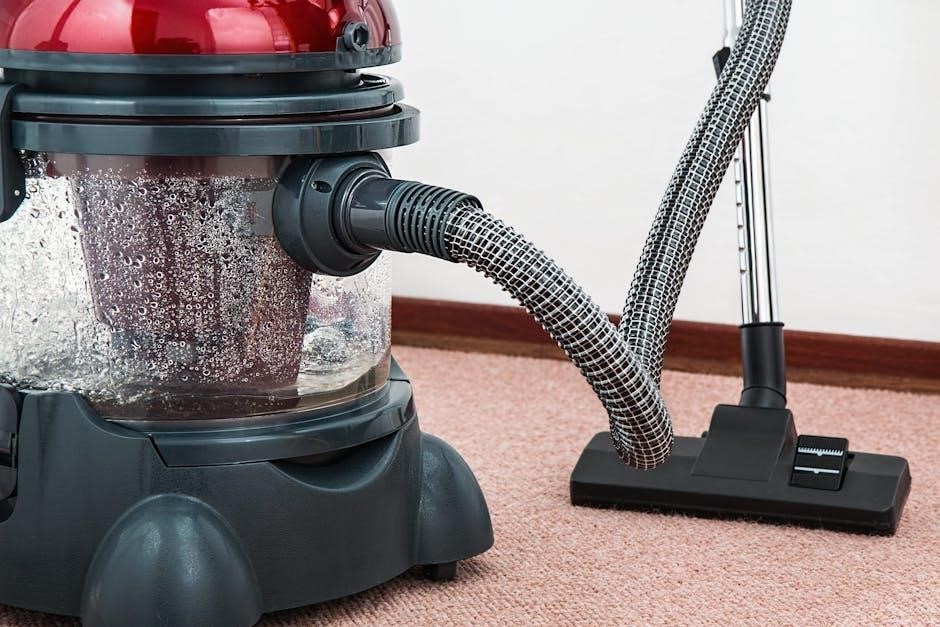
Eureka Vacuum Manuals: A Comprehensive Guide
Navigating the world of floor care requires understanding your appliance; Eureka vacuum manuals are essential resources for optimal performance and longevity.
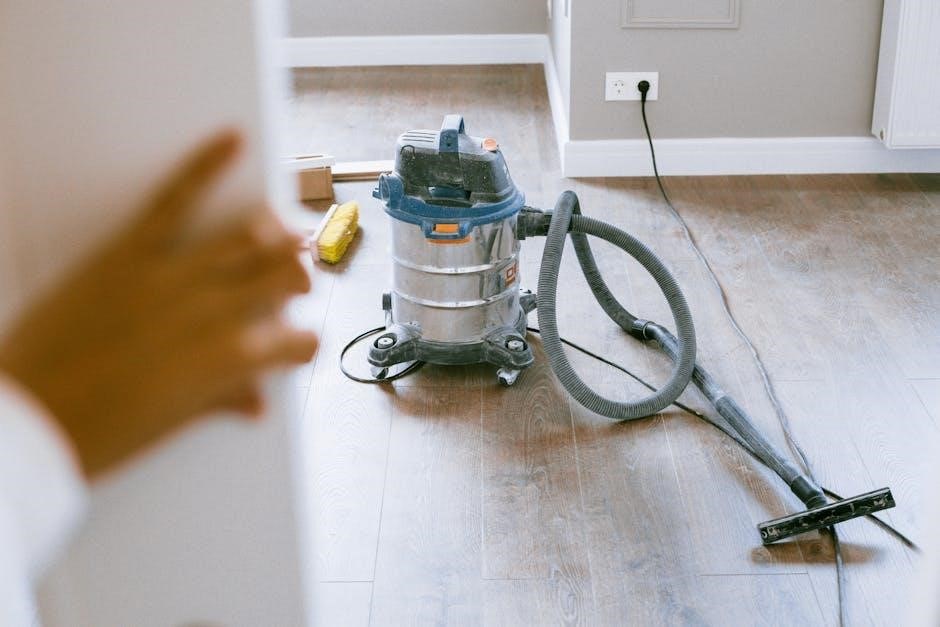
Eureka has been a trusted name in home cleaning for over a century, consistently delivering innovative and reliable vacuum cleaners to households across the nation. From its humble beginnings crafting manual treadle vacuums to today’s advanced, technologically driven models, Eureka has adapted to evolving cleaning needs.
The brand’s commitment to quality and affordability has made it a popular choice for families seeking effective cleaning solutions. However, maximizing the lifespan and performance of any Eureka vacuum requires a thorough understanding of its features and proper maintenance procedures.
This is where the Eureka vacuum manual becomes invaluable. These guides aren’t simply instruction booklets; they are comprehensive resources detailing everything from initial setup and operation to troubleshooting common issues and performing essential upkeep. Ignoring the manual can lead to improper use, reduced cleaning efficiency, and potentially even damage to your vacuum.
Why Use a Manual?
Ignoring your Eureka vacuum manual is akin to navigating unfamiliar territory without a map. While many assume operating a vacuum is intuitive, modern models boast specialized features demanding specific instructions for optimal use and to avoid accidental damage.
The manual unlocks the full potential of your machine, detailing proper assembly, recommended settings for various floor types, and the correct way to utilize attachments. It’s your first line of defense against common cleaning mistakes that can diminish suction power or harm delicate surfaces.
Furthermore, the manual provides crucial safety information, preventing potential hazards during operation and maintenance. It also outlines the warranty details, ensuring you understand your rights and how to claim support if needed. Ultimately, consulting the manual translates to a longer-lasting, more efficient, and safer cleaning experience with your Eureka vacuum.

Types of Eureka Vacuum Models
Eureka offers diverse cleaning solutions; understanding each model – upright, canister, stick, and handheld – is key to locating the correct manual for your needs.
Upright Vacuums
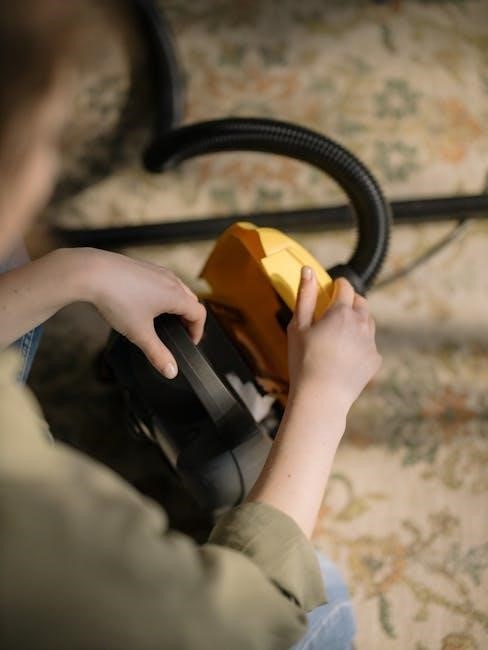
Eureka upright vacuums are renowned for their powerful suction and robust cleaning capabilities, making them a staple in many households. Manuals for these models typically dedicate significant sections to brushroll maintenance, detailing how to remove, clean, and replace the brushroll to maintain optimal performance on carpets and rugs.
You’ll find detailed diagrams illustrating belt replacement procedures, a common maintenance task for uprights. Troubleshooting sections often address issues like loss of suction, frequently linked to full dust cups or clogged filters. Specific attention is given to height adjustment features, explaining how to modify the cleaner head for different floor types – from high-pile carpets to hard floors.
Manuals also cover the proper use of attachments, such as crevice tools and dusting brushes, designed for reaching tight spaces and delicate surfaces. Safety precautions specific to upright models, like avoiding vacuuming flammable liquids, are prominently displayed. Understanding these details ensures effective cleaning and extends the lifespan of your Eureka upright vacuum.
Canister Vacuums
Eureka canister vacuum manuals emphasize the versatility of these models, highlighting their maneuverability and suitability for various floor types and above-floor cleaning. A substantial portion of the manual focuses on hose and wand assembly and usage, detailing proper connection techniques and extension capabilities for reaching difficult areas.
Troubleshooting sections commonly address issues related to airflow restrictions within the hose or wand, providing guidance on identifying and removing blockages. Manuals illustrate filter locations and cleaning/replacement procedures, crucial for maintaining suction power. Specific instructions are provided for utilizing different floor nozzles – from hard floor brushes to motorized power nozzles for carpets.
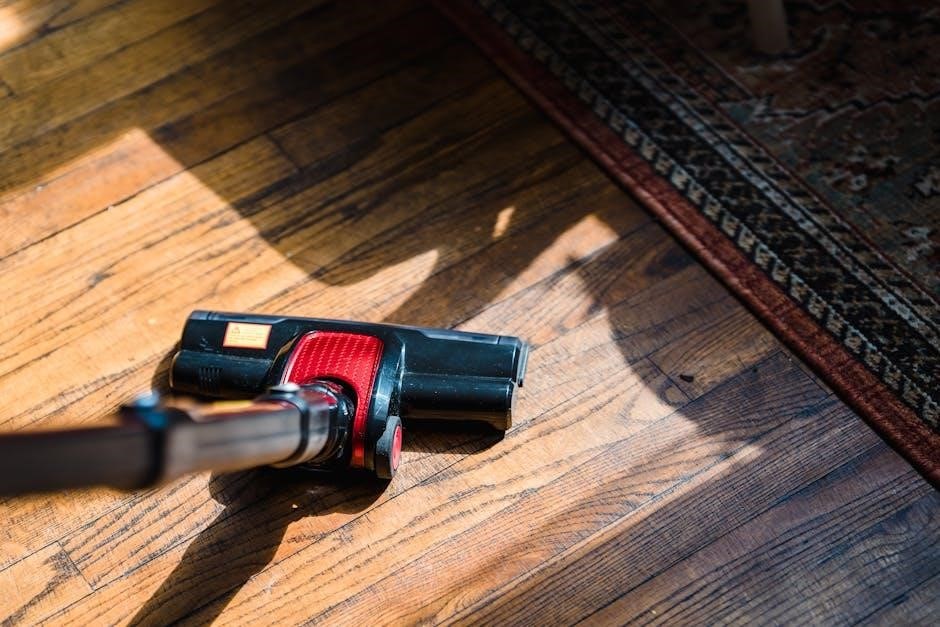
You’ll find detailed explanations of the rewind mechanism for the power cord, along with safety warnings regarding cord usage. The manual also covers emptying the dust container and explains the benefits of using different filter types. Proper understanding of these features maximizes the cleaning efficiency of your Eureka canister vacuum.
Stick Vacuums
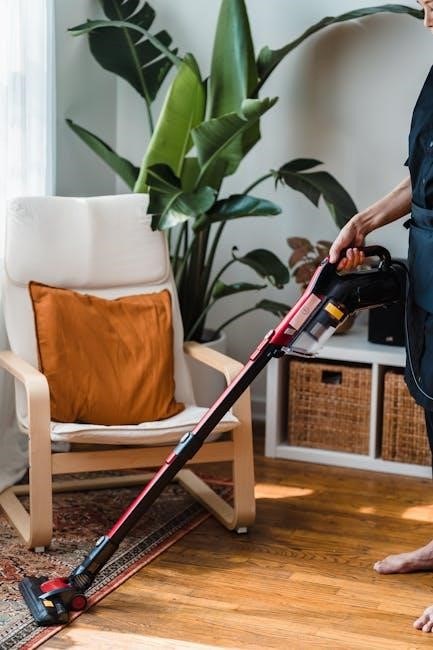
Eureka stick vacuum manuals prioritize simplicity and ease of use, reflecting the lightweight and convenient nature of these models. A significant portion details the quick-start guide, focusing on assembly – often a minimal process – and transitioning between floor and handheld modes, if applicable. Manuals clearly illustrate charging procedures and indicator light meanings, crucial for cordless operation.
Troubleshooting sections commonly address battery performance and potential charging issues, offering solutions like checking the power adapter and ensuring proper contact. Filter maintenance is heavily emphasized, as these compact vacuums rely on efficient filtration for sustained suction. The manual will detail how to access and clean or replace the filter.
Instructions cover crevice tools and dusting brushes, highlighting their use for versatile cleaning. Safety precautions regarding battery handling and avoiding water exposure are prominently featured. Understanding these details ensures optimal performance and extends the lifespan of your Eureka stick vacuum.
Handheld Vacuums
Eureka handheld vacuum manuals concentrate on their portability and specialized cleaning applications. They typically begin with a detailed parts diagram, given the compact size, and emphasize charging procedures – vital for cordless models. Manuals clearly explain attachment usage, detailing the purpose of crevice tools, brush nozzles, and upholstery attachments for various surfaces.
Troubleshooting sections often focus on suction loss, guiding users to check for blockages in the nozzle or dust cup. Emptying the dust cup is a frequently addressed topic, with clear illustrations. Battery care is paramount, with warnings against overcharging and proper storage techniques.
Safety instructions highlight avoiding liquids and flammable materials. The manual will also cover basic maintenance, like wiping down the exterior and ensuring proper filter placement. Understanding these details maximizes the handheld vacuum’s effectiveness for quick cleanups and targeted debris removal.
Finding Your Eureka Vacuum Manual
Locating the correct manual is crucial; Eureka offers several avenues for access, including their website and various online databases for easy retrieval.
Eureka’s Official Website
The primary source for your Eureka vacuum manual is, unsurprisingly, the official Eureka website. Typically, you’ll find a dedicated “Support” or “Customer Service” section easily navigable from the homepage. Within this area, look for a “Manuals” or “Downloads” subsection.
Eureka generally organizes manuals by vacuum type – uprights, canisters, sticks, and handhelds – to streamline your search. You can often browse by category or utilize a search bar, which is particularly helpful if you know your model number. The website usually provides manuals in PDF format, allowing for easy viewing and printing.
Beyond just the manual itself, Eureka’s website may also offer helpful FAQs, troubleshooting guides, and video tutorials that complement the written instructions. Regularly check the site for updated manuals, as models evolve and documentation is revised. Ensure you are on the official Eureka website to avoid downloading potentially inaccurate or malicious files from unofficial sources.
Third-Party Manual Databases
When the official Eureka website doesn’t yield results, several reputable third-party manual databases can be invaluable resources. Websites like ManualsLib, ManualsOnline, and similar platforms host a vast collection of user manuals for various appliances, including Eureka vacuums.
These databases rely on user submissions and web scraping, so the availability of specific manuals can vary. It’s crucial to verify the manual’s accuracy by comparing the model number and features described within to your actual vacuum. Be cautious of sites with excessive advertisements or suspicious download links.
While convenient, remember these are not official sources. Always prioritize the Eureka website if possible. These databases can be particularly useful for older or discontinued models where the official documentation is no longer readily available; Exercise diligence and common sense when downloading from third-party sites to protect your device and data.
Using the Model Number
Locating your Eureka vacuum’s model number is paramount when searching for the correct manual. This unique identifier ensures you access documentation specifically tailored to your machine’s features and specifications. The model number is typically found on a sticker or plate affixed to the vacuum itself.
Common locations include the underside of the unit, inside the dust cup compartment, or near the motor housing. It’s usually a combination of letters and numbers – for example, “NEU120” or “71B.” Carefully note the entire number, as even a slight variation can lead to an incorrect manual.
When searching online, enter the complete model number into the search bar of the Eureka website or a third-party database. This precise search will filter results, presenting you with the most relevant manual. Having the model number readily available significantly streamlines the process and avoids frustration.
Understanding Common Manual Sections
Eureka manuals consistently feature crucial sections: safety guidelines, detailed assembly steps, clear operating procedures, and helpful troubleshooting advice for users.
Safety Precautions
Eureka vacuum manuals prioritize user safety with detailed precautions. Always unplug the vacuum before performing any maintenance or troubleshooting. Never operate the vacuum with a damaged cord or plug; immediate replacement is crucial.
Avoid using outdoors or on wet surfaces to prevent electrical shock. Do not vacuum flammable liquids or combustible materials. Keep hair, loose clothing, and fingers away from moving parts.
The manual will explicitly warn against using the vacuum as a toy and emphasize adult supervision when children are present. Never block the ventilation openings, as this can cause overheating. Regularly inspect the dust bag or canister and empty it before it’s full to maintain optimal suction and prevent motor strain. Always use genuine Eureka replacement parts to ensure continued safety and performance. Ignoring these precautions could lead to injury or damage.
Assembly Instructions
Eureka vacuum manuals dedicate a section to clear, step-by-step assembly. Typically, this begins with attaching the handle to the main body, often secured with screws or a locking mechanism – diagrams are crucial here. Next, the hose and wand are connected, ensuring a firm click to prevent detachment during use.
For models with attachments, the manual illustrates proper connection points for crevice tools, dusting brushes, and upholstery nozzles. Pay close attention to orientation; incorrect assembly can reduce effectiveness.
Bagless models detail canister attachment and filter placement. Upright vacuums often require attaching the brushroll housing. The manual emphasizes verifying all connections are secure before operation. A parts list with corresponding illustrations is standard, aiding in identifying components. Following these instructions precisely guarantees optimal performance and prevents potential damage to the vacuum.
Operating Instructions
Eureka vacuum manuals provide detailed operating instructions, beginning with power cord connection and safety checks. They explain the function of each control – power switch, suction control, brushroll on/off, and height adjustment. Understanding height adjustment is key for effective cleaning on various floor types, from hardwood to carpets.
The manual clarifies proper vacuuming techniques: overlapping strokes for thorough cleaning, and maneuvering around furniture. Specific instructions detail using attachments for specialized cleaning tasks like upholstery or tight spaces.
For bagged models, it explains bag installation and replacement indicators. Bagless models detail canister emptying procedures. The manual often includes tips for maximizing suction and efficiency. It emphasizes turning off and unplugging the vacuum before any maintenance or troubleshooting. Following these guidelines ensures safe and effective operation.

Troubleshooting Common Issues
Eureka vacuum manuals dedicate sections to resolving frequent problems, offering step-by-step guidance for diagnosing and fixing issues quickly and efficiently.
Loss of Suction
A common frustration with any vacuum, including Eureka models, is a noticeable loss of suction power. Your manual will typically address this first by instructing you to check for a full dust cup or bag – this is the most frequent culprit!
Next, the manual guides you to inspect the filters. Clogged filters severely restrict airflow, diminishing suction. Most Eureka vacuums have multiple filters requiring periodic cleaning or replacement, and the manual details the specific process for your model.
Furthermore, the manual will advise checking for blockages in the hose, wand, and floor nozzle. A simple obstruction can dramatically reduce suction. Finally, it may suggest examining the belt (for uprights) to ensure proper brushroll rotation, as a stalled brushroll can also contribute to perceived suction loss. Following these steps, as outlined in your Eureka manual, will often restore optimal suction.
Brushroll Not Spinning
If your Eureka vacuum’s brushroll isn’t spinning, your manual will direct you to several troubleshooting steps. Initially, it will instruct you to disconnect the vacuum from power for safety. The first check involves inspecting the brushroll for tangled hair, string, or debris – these are common causes of stoppage.
Your manual will then guide you to examine the belt. A broken or stretched belt is a frequent reason for a non-spinning brushroll. The manual provides diagrams illustrating belt replacement procedures specific to your model.
It will also advise checking for blockages within the brushroll housing. Sometimes, larger objects can jam the mechanism. Finally, the manual may suggest inspecting the motor brushroll drive socket for damage. Addressing these issues, as detailed in your Eureka manual, should resolve the problem and restore brushroll functionality.
Electrical Problems
Eureka vacuum manuals prioritize safety when addressing electrical issues. The first and most crucial instruction is to immediately disconnect the vacuum from the power outlet. Never attempt repairs while the unit is plugged in. Your manual will detail checking the power cord for any visible damage – frays, cuts, or exposed wires.
It will guide you to inspect the circuit breaker or fuse box to ensure the circuit hasn’t tripped or the fuse blown. The manual will also explain how to check the vacuum’s internal fuse (if applicable), providing its location and the correct replacement amperage.
If the problem persists, the manual strongly advises against self-repair of internal electrical components and recommends contacting a qualified service technician. Attempting such repairs yourself could void the warranty and pose a safety hazard. Always refer to your specific model’s manual for detailed instructions.

Maintenance and Care
Regular upkeep, as detailed in your Eureka vacuum manual, ensures peak suction, extends the lifespan, and maintains optimal cleaning performance consistently.
Filter Cleaning & Replacement
Maintaining a clean filter is paramount for your Eureka vacuum’s performance. Your manual will detail the specific filter type(s) – foam, cloth, or HEPA – and their respective cleaning procedures. Most filters are washable; gently rinse under cool water until the water runs clear, then allow to completely air dry before reinstalling.
Crucially, never operate the vacuum with a wet filter! Replacement frequency varies based on usage and filter type, but generally, washable filters should be replaced every 6-12 months, while non-washable filters require more frequent changes, often every 3-6 months.
Ignoring filter maintenance leads to reduced suction, motor overheating, and potentially, voided warranty claims. The manual provides diagrams illustrating filter location and removal, ensuring a hassle-free process. Always refer to your specific model’s instructions for accurate guidance on filter care and replacement intervals.
Belt Replacement
A broken or stretched belt is a common culprit behind a non-spinning brushroll in Eureka upright vacuums. Your vacuum manual provides detailed, step-by-step instructions – often with accompanying diagrams – on how to access and replace the belt. Typically, this involves removing the bottom plate of the vacuum cleaner.
Carefully note the belt’s routing before removal; taking a picture can be incredibly helpful! Ensure the new belt is the correct size and type for your specific model. Installing the belt correctly is vital; it should fit snugly around both the brushroll and the motor shaft.
Incorrect installation can lead to immediate breakage or damage. The manual will also specify the recommended belt replacement schedule, usually every 12-18 months with regular use. Regularly checking and replacing the belt proactively prevents more significant issues and maintains optimal cleaning performance.
Hose & Wand Inspection
Regularly inspecting the hose and wand for cracks, holes, or blockages is crucial for maintaining strong suction power in your Eureka vacuum. Your manual will detail how to detach these components for thorough examination. Look closely for any visible damage – even small cracks can significantly reduce airflow.
To check for blockages, disconnect the hose and wand and shine a flashlight through them. Remove any debris, such as dust bunnies, hair, or larger objects, that may be obstructing the passage. The manual might suggest using a long, flexible tool to dislodge stubborn clogs.
Ensure all connections are secure after reassembly. A loose connection can also cause a loss of suction. Following the manual’s guidance on proper hose and wand maintenance extends the life of these components and ensures your vacuum operates efficiently.
Advanced Features & Manual Details
Modern Eureka vacuums boast specialized features; manuals thoroughly explain these, from digital controls to advanced filtration, maximizing cleaning potential and user experience.
HEPA Filtration Explained
High-Efficiency Particulate Air (HEPA) filtration is a crucial feature in many Eureka vacuum cleaners, particularly those designed for allergy sufferers or households with pets. Your Eureka manual dedicates sections to understanding how HEPA filters function, detailing their ability to trap 99.97% of particles 0.3 microns in size;
These particles include dust mites, pollen, pet dander, mold spores, and other common allergens. The manual will explain the filter’s location within your specific model and provide clear instructions on how to remove, clean (if applicable – some are non-washable), and replace the HEPA filter.
Regular maintenance of the HEPA filter is vital; a clogged filter reduces suction and compromises air quality. The manual outlines a recommended replacement schedule, often based on usage frequency. Understanding HEPA filtration empowers you to create a healthier home environment with your Eureka vacuum.
Bagless vs. Bagged Systems – Manual Differences
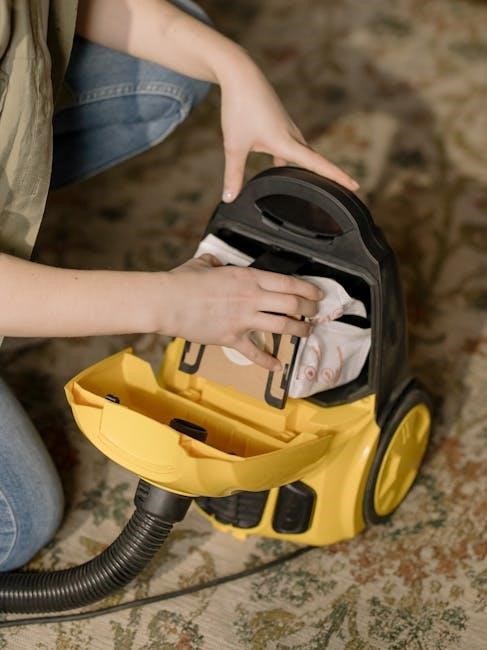
Eureka vacuum manuals differ significantly depending on whether the model utilizes a bagless or bagged system. Bagged models’ manuals focus on bag installation, change-out procedures, and identifying compatible bag types – often including part numbers for easy reordering; They’ll detail how a full bag impacts suction power.
Bagless vacuum manuals, conversely, emphasize dust cup emptying and filter maintenance. Instructions will illustrate the proper technique for releasing the dust cup and cleaning its components to prevent clogs and maintain optimal airflow. Manuals will also highlight the importance of washing or replacing filters more frequently in bagless systems due to increased dust exposure.
Both manual types will cover general maintenance, but the specifics regarding dust containment and disposal will be tailored to the vacuum’s collection method, ensuring efficient and hygienic operation.
Warranty Information Location in Manuals
Locating warranty details within your Eureka vacuum manual is crucial for understanding your consumer rights. Typically, this information isn’t on the first few pages; instead, it’s usually found towards the back of the manual, often in a dedicated “Warranty” or “Important Information” section;
Expect to find specifics regarding the warranty period (e.g., one year, two years), what components are covered (motor, parts, labor), and what voids the warranty (misuse, unauthorized repairs). Many manuals include a separate warranty card that needs to be registered online or mailed in to activate full coverage.
Pay close attention to any limitations or exclusions. Some warranties cover defects in materials and workmanship but not normal wear and tear. Keep your proof of purchase alongside the manual for streamlined warranty claims.
Leave a Reply
You must be logged in to post a comment.